9.8.17

23.1.16
Stream The Changing Same on XRAY.fm /// January 24th Broadcast via Soundcloud:
Time for CHURCH on sunday double hour! (we've moved!) welcome.
TRACKLIST:
Time for CHURCH on sunday double hour! (we've moved!) welcome.
TRACKLIST:
- Of Course, Of Course / Charles Lloyd - I Long to See You; Blue Note 2016
- Tying Up Loose Ends / Gary Burton - New Quartet; ECM
- Song For Jesus / William Parker Quartet - AUM Fidelity
- European Echoes / Ornette Coleman - Body Meta; Artists House
- Status Seeking / Mal Waldron Quintet - The Quest; Riverside Records
- Full Moon / Roy Haynes - Senyah; Mainstream Records
- La Llarona / Charles Lloyd - I Long to See You; Blue Note 2016
- Semblence / Gary Burton - Times Square; ECM
- Magnetar / Elliott Sharp Aggregate - Clean Feed
- Wayfinder / Chris Potter - the Sirens; ECM
- Toulouse / Ahmad Jamal - The Essence Volume 1; Birdology
- Colors / Sam Rivers RivBea Orchestra - Aurora; Rivbea Records
- Out of Nowhere / Sun Ra - The Eternal Myth Revealed; Saturn
- Blues at Midnight / Sun Ra - Super Sonic Jazz; Saturn
- Scrapbook / William Parker Violin Trio - Scrapbook; Thirsty Ear
- Africa / Alice Coltrane - Live in Warsaw (bootleg)

15.5.13
FATAYIR
Ok. Since now you've MASTERED my pita recipe, it is time to put that skill to work and make fatayir. Fatayer or Fitiir is an Arab meat pie pastry that can alternatively be stuffed with spinach (sabaneq), or cheese (jibnah). It is part of Arab cuisine and is eaten in Kuwait, Turkey, Syria, Palestine, Egypt, Lebanon, Jordan, and other Arab countries in the region.
Think Middle Eastern calzone.
I highly suggest reading through the entire recipe first, before you even go into the kitchen. There are instructions on how to compose fatayir as well as two fillings.
Fatayir: Middle Eastern savory turnovers
Lentil Filling
3 ozs. (by weight and measure) Lentilles du Puy (small, black-green French lentils)
1 medium-large potato (1/2 lb.)
3 medium-size Roma tomatoes (scant 1/2 lb. total weight), or substitute 6 ozs. (by weight and measure) good-quality canned tomatoes (e.g., Muir Glen or Cento brand)
2 tablespoon olive oil
3. Place a skillet over high heat; when hot, add olive oil, then greens of choice*. Sauté greens with scallion, onion, and a light sprinkling of salt. Cook until limp and mostly dry—5-10 minutes. If using fresh tomatoes, add and saute until cooked through and mixture becomes dry again Canned tomatoes do not require re-cooking; add, mix in, remove from heat.
4. Add cooked greens mixture, nuts, and seasonings to lentil/potato and mix thoroughly. Taste and correct seasonings.
5. See recipe “Fatayir: Composing and Baking” above for final instructions.
Makes 18 ozs. filling by weight, 2 1/3 cups by measure—enough for 10-12 fatayir.
* For part or all of the spinach, you can substitute chard, kale, mizuna, arugula, tatsoi—any combination of greens that you like. Half of a 10-oz. package of good-quality frozen spinach (e.g., Cascadian Farms brand)—thawed and squeezed out well—can also substitute.
Spinach-Cheese Filling
1 large bunch spinach, 10-12 ozs. by weight before cleaning/trimming*12-15 large scallions**
5 ozs. feta cheese (by weight; measures 5-6 ozs. by volume after crumbling)
3 ozs. mozzarella (by weight; about 1/2 cup by volume after grating)
1/2 small bunch Italian parsley (optional)
2 tablespoons olive oil
Sprinkling of salt
3 ozs. ricotta cheese (by weight; 1/3 cup by volume)
1/4 teaspoon coarsely ground black pepper, or to taste
1. Remove all tough stems and veins from greens of choice*; clean and drain on a towel, then chop or tear up small. You should have 4 cups of greens, packed down. Trim roots and any wilted parts from scallions, cut once lengthwise, and chop crosswise to make 1-1 1/2 cups. Crumble feta small and grate mozzarella. If grating by food processor, use steel blade, not grating disc. If using parsley, discard stems and chop enough leaves to make a good-sized handful; set aside
2. Place a skillet over high heat; when hot, add olive oil, then greens and scallions and a very light sprinkling of salt—just enough to speed wilting and evaporation. Saute until greens are limp and almost dry—5-10 minutes. Combine all ingredients, including sautéed greens, etc. and mix thoroughly. Taste and add salt, if needed.
3. See recipe, “Fatayir: Composing and Baking” for final instructions.
(Makes 18 ozs. filling by weight, 2 1/4 cups by measure—enough for 10-12 fatayir.)
* For part or all of the spinach, you can substitute chard, kale, mizuna, tatsoi, arugula— any combination of greens that you like. A 10-oz. package of good-quality frozen spinach (e.g., Cascadian Farms brand)—thawed and squeezed out well—can also substitute.
**Or use a combination of scallions and leeks.
Composing and baking fatayir:
A little less than 1/2 batch “Bread Dough, Basic Yeast, f/ Baguettes, etc.”—see recipe
(i.e., 1 1/2 lbs. dough by weight, 1 1/2 cups by measure)
1 recipe Spinach-Cheese Filling for Fatayir or Lentil Filling for Fatayir (see recipes above)
1. Preheat oven to 425 degrees. Option: line a baking sheet with parchment paper for easier cleanup.
2. Divide dough into 10-12 equal portions (cook’s choice); shape each into a squat ball, like a small tangerine, then dip whole ball in flour. (For technique, see recipe, “Bread, Pita, etc.”). Cover with a clean, dry, low-lint towel and let rest 15 minutes. Meanwhile, divide filling into as many portions as there are dough balls.3. After the 15 minutes, roll out each dough ball on a floured surface to make a disc about 6-inches in diameter. To minimize sticking and maintain roundness, turn dough over and rotate it a quarter turn frequently, adding flour as needed. When ready, pat dough disc hard between palms to shed excess flour, then place flat on a clean surface. Preheat an ungreased baking sheet (with/without parchment ).
4. Brush or dab a little water along edge of lower half of each disc; moistened margin should be damp, not wet, and only 1/4-inch wide. Place 1 portion of filling on lower half of disc and distribute to cover that half without the filling touching the dampened rim. Fold (empty) top half of dough disc over bottom half so edges meet; pat filled area to flatten and distribute filling and to expel air pockets. Press wet and dry rims together hard, to seal; then flute, pinch, or twist to finish sealing and decorate.
5. Place on pre-heated baking sheet. Bake about 15 minutes, rotating front to back after 10 minutes for even cooking. Remove from oven when puffed and showing a little gold-browning in spots on top and underside.
Makes 10-12 pastries, i.e., 5-6 main-course portions of 2 per person; or 10-12 lunch or snack size portions of 1 per person
Think Middle Eastern calzone.
I highly suggest reading through the entire recipe first, before you even go into the kitchen. There are instructions on how to compose fatayir as well as two fillings.
Fatayir: Middle Eastern savory turnovers
Lentil Filling
3 ozs. (by weight and measure) Lentilles du Puy (small, black-green French lentils)
1 medium-large potato (1/2 lb.)
Small bunch of spinach (5-6 ozs. by weight before cleaning/trimming)*
4 or 5 large scallions
1 small onion (1/4 lb.)
4 or 5 large scallions
1 small onion (1/4 lb.)
3 medium-size Roma tomatoes (scant 1/2 lb. total weight), or substitute 6 ozs. (by weight and measure) good-quality canned tomatoes (e.g., Muir Glen or Cento brand)
2 tablespoon olive oil
3/4 teaspoon salt, plus a little for cooking greens
2 tablespoons pine nuts
1 1/2 teaspoons powdered cumin
1/4 teaspoon black pepper
1/2 rounded teaspoon dried basil
1. In a small saucepan, in plenty of water, bring lentils to a boil; reduce to a simmer and cook about 20 minutes—until just tender but not mushy. Taste to tell. Check every few minutes and add water if drying out. Drain well and move to a mixing bowl. Meanwhile, peel, halve and boil the potato until just fork tender. Drain, return to pot, and mash coarsely, leaving some pieces about the size of a kidney bean. Add to lentils.
2. Remove all tough stems and veins from greens; clean and drain on a towel; chop or tear up small. You should have 2 cups of greens, packed down. Trim roots and any wilted parts from scallions, cut once lengthwise and chop crosswise to make about 1/2 cup. Peel and finely chop onion to make about 1/2 cup. Core tomatoes and cut into 1/4-inch dice; if using canned tomatoes, drain before chopping; either should equal 3/4 cup after chopping.
1 1/2 teaspoons powdered cumin
1/4 teaspoon black pepper
1/2 rounded teaspoon dried basil
1. In a small saucepan, in plenty of water, bring lentils to a boil; reduce to a simmer and cook about 20 minutes—until just tender but not mushy. Taste to tell. Check every few minutes and add water if drying out. Drain well and move to a mixing bowl. Meanwhile, peel, halve and boil the potato until just fork tender. Drain, return to pot, and mash coarsely, leaving some pieces about the size of a kidney bean. Add to lentils.
2. Remove all tough stems and veins from greens; clean and drain on a towel; chop or tear up small. You should have 2 cups of greens, packed down. Trim roots and any wilted parts from scallions, cut once lengthwise and chop crosswise to make about 1/2 cup. Peel and finely chop onion to make about 1/2 cup. Core tomatoes and cut into 1/4-inch dice; if using canned tomatoes, drain before chopping; either should equal 3/4 cup after chopping.
3. Place a skillet over high heat; when hot, add olive oil, then greens of choice*. Sauté greens with scallion, onion, and a light sprinkling of salt. Cook until limp and mostly dry—5-10 minutes. If using fresh tomatoes, add and saute until cooked through and mixture becomes dry again Canned tomatoes do not require re-cooking; add, mix in, remove from heat.
4. Add cooked greens mixture, nuts, and seasonings to lentil/potato and mix thoroughly. Taste and correct seasonings.
5. See recipe “Fatayir: Composing and Baking” above for final instructions.
Makes 18 ozs. filling by weight, 2 1/3 cups by measure—enough for 10-12 fatayir.
* For part or all of the spinach, you can substitute chard, kale, mizuna, arugula, tatsoi—any combination of greens that you like. Half of a 10-oz. package of good-quality frozen spinach (e.g., Cascadian Farms brand)—thawed and squeezed out well—can also substitute.
Spinach-Cheese Filling
1 large bunch spinach, 10-12 ozs. by weight before cleaning/trimming*12-15 large scallions**
5 ozs. feta cheese (by weight; measures 5-6 ozs. by volume after crumbling)
3 ozs. mozzarella (by weight; about 1/2 cup by volume after grating)
1/2 small bunch Italian parsley (optional)
2 tablespoons olive oil
Sprinkling of salt
3 ozs. ricotta cheese (by weight; 1/3 cup by volume)
1/4 teaspoon coarsely ground black pepper, or to taste
1. Remove all tough stems and veins from greens of choice*; clean and drain on a towel, then chop or tear up small. You should have 4 cups of greens, packed down. Trim roots and any wilted parts from scallions, cut once lengthwise, and chop crosswise to make 1-1 1/2 cups. Crumble feta small and grate mozzarella. If grating by food processor, use steel blade, not grating disc. If using parsley, discard stems and chop enough leaves to make a good-sized handful; set aside
2. Place a skillet over high heat; when hot, add olive oil, then greens and scallions and a very light sprinkling of salt—just enough to speed wilting and evaporation. Saute until greens are limp and almost dry—5-10 minutes. Combine all ingredients, including sautéed greens, etc. and mix thoroughly. Taste and add salt, if needed.
3. See recipe, “Fatayir: Composing and Baking” for final instructions.
(Makes 18 ozs. filling by weight, 2 1/4 cups by measure—enough for 10-12 fatayir.)
* For part or all of the spinach, you can substitute chard, kale, mizuna, tatsoi, arugula— any combination of greens that you like. A 10-oz. package of good-quality frozen spinach (e.g., Cascadian Farms brand)—thawed and squeezed out well—can also substitute.
**Or use a combination of scallions and leeks.
Composing and baking fatayir:
A little less than 1/2 batch “Bread Dough, Basic Yeast, f/ Baguettes, etc.”—see recipe
(i.e., 1 1/2 lbs. dough by weight, 1 1/2 cups by measure)
1 recipe Spinach-Cheese Filling for Fatayir or Lentil Filling for Fatayir (see recipes above)
1. Preheat oven to 425 degrees. Option: line a baking sheet with parchment paper for easier cleanup.
2. Divide dough into 10-12 equal portions (cook’s choice); shape each into a squat ball, like a small tangerine, then dip whole ball in flour. (For technique, see recipe, “Bread, Pita, etc.”). Cover with a clean, dry, low-lint towel and let rest 15 minutes. Meanwhile, divide filling into as many portions as there are dough balls.3. After the 15 minutes, roll out each dough ball on a floured surface to make a disc about 6-inches in diameter. To minimize sticking and maintain roundness, turn dough over and rotate it a quarter turn frequently, adding flour as needed. When ready, pat dough disc hard between palms to shed excess flour, then place flat on a clean surface. Preheat an ungreased baking sheet (with/without parchment ).
4. Brush or dab a little water along edge of lower half of each disc; moistened margin should be damp, not wet, and only 1/4-inch wide. Place 1 portion of filling on lower half of disc and distribute to cover that half without the filling touching the dampened rim. Fold (empty) top half of dough disc over bottom half so edges meet; pat filled area to flatten and distribute filling and to expel air pockets. Press wet and dry rims together hard, to seal; then flute, pinch, or twist to finish sealing and decorate.
5. Place on pre-heated baking sheet. Bake about 15 minutes, rotating front to back after 10 minutes for even cooking. Remove from oven when puffed and showing a little gold-browning in spots on top and underside.
Makes 10-12 pastries, i.e., 5-6 main-course portions of 2 per person; or 10-12 lunch or snack size portions of 1 per person
21.2.13
JOHN COLTRANE / CECIL TAYLOR - COLTRANE TIME
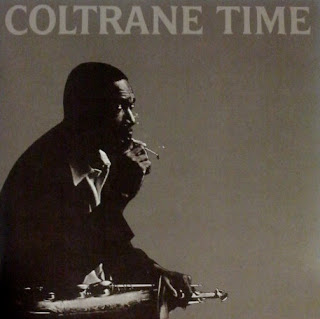
Here is: the recording session where John Coltrane and Cecil Taylor collaborated. Originally titled "Stereo Drive," then "Hard Driving Jazz," finally "Coltrane Time."
12.2.13
ORNETTE COLEMAN - CRISIS

Crisis is a live album by Ornette Coleman recorded at New York University in 1969 and released on the Impulse! label.
It features 1/2 of his classic quartet: Charlie Haden and Don Cherry. Dewey Redman also appears here, and he may as well be considered "classic" as far as an Ornette collaborator goes - and same goes for Ornette's son, Denardo, who plays drums on this recording (who must've been only 13 when this record was cut).
From Wikipedia:
"The Allmusic review by Brian Olewnick awarded the album 4½ stars and stated "Crisis somehow lacks the reputation of the revolutionary Coleman albums from early in his career, but on purely musical grounds it ranks among his most satisfying works."
info: http://www.mediafire.com/download.php?44cqo8g39ooqx3v
ANTHONY BRAXTON & RICHARD TEITELBAUM - SILENCE/TIME ZONES
Here is an awesome 1996 reissue of some improvisations by Anthony Braxton, Leo Smith, Leroy Jenkins, and Richard Teitelbaum. Recorded in '69 and '76; Richard Teitelbaum plays various Moog synths - which teamed with Braxton's contrabass clarinet, makes this recording totally rad.
1 Anthony Braxton, Leroy Jenkins, Leo Smith – Off The Top Of My Head 16:43
Saxophone, Producer, Other [Miscellaneous Instruments] – Anthony BraxtonTrumpet, Producer, Other [Miscellaneous Instruments] – Leo SmithViolin, Producer, Other [Miscellaneous Instruments] – Leroy Jenkins
2 Anthony Braxton, Leroy Jenkins, Leo Smith – Silence 14:43
Saxophone, Producer, Other [Miscellaneous Instruments] – Anthony BraxtonTrumpet, Producer, Other [Miscellaneous Instruments] – Leo SmithViolin, Producer, Other [Miscellaneous Instruments] – Leroy Jenkins
3 Richard Teitelbaum With Anthony Braxton – Crossing (Dedicated To Roscoe Mitchell) 23:08
Recorded By – Bill WarrenSopranino Saxophone, Alto Saxophone, Contrabass Clarinet – Anthony BraxtonSynthesizer [Modular Moog], Synthesizer [Micromoog] – Richard Teitelbaum
4 Richard Teitelbaum With Anthony Braxton – Behmoth Dreams (Dedicated To Maryanne Amacher) 18:24
Recorded By – Thomas MarkSopranino Saxophone, Alto Saxophone, Contrabass Clarinet – Anthony BraxtonSynthesizer [Modular Moog], Synthesizer [Micromoog] – Richard Teitelbaum 18:24
3 recorded live in concert on June 10, 1976 at the Creative Music Festival, Mt. Temper, New York and mixed at Sound Ideas, New York City.
4 recorded on September 16, 1976 at Bearsville Sound, Woodstock, New York.
1 & 2 originally released on Freedom 278.128, 1974.
3 & 4 originally released on Arista/Freedom 1037, 1977.
info: http://www.mediafire.com/?f1esotcka5hl6vh
31.1.13
INTERPLANETARY SAM RIVERS MONTH: Sam Rivers Trio - Live in Lovere '77


INTERPLANETARY SAM RIVERS MONTH: SAM RIVERS - CONTRASTS - 1979 ECM

Sam Rivers - tenor and soprano saxophone, flute
George Lewis - trombone
Dave Holland - bass
Thruman Baker - drums, marimba
Recorded in Ludwigsburg, December 1979
01 Circles
02 Zip
03 Solace
04 Verve
05 Dazzle
06 Image
07 Lines
http://www.mediafire.com/file/aze2nyyzudc
http://www.mediafire.com/file/jqh4m3mljyz
http://www.mediafire.com/file/nnkhoqmwiua
Flac with low quality cover image.
30.1.13
INTERPLANETARY SAM RIVERS MONTH - X2 LP: Black Africa! Villalago & Black Africa! Perugia

Black Africa! Villalago:
Horo catalogue # HDP 03-04
Recorded at the Umbria Jazz Festival in Villalago, Italy, July 24, 1976 (except for track 5, which was recorded in Perugia, Italy on July 25, 1976)
Personnel:
Sam Rivers - Tenor Sax, Soprano Sax, Flute, Piano, Voice
Joe Daley - Tuba, Euphonium
Sidney Smart - Drums, Percussion
Don Pullen - Piano (track 3)
Tracks:
1. Soprano Section
2. Piano & Flute Sections
3. Flute & Tenor Sections
4. Villalago: Encore
5. Perugia Concert: Finale
Black Africa! Perugia:
Horo catalogue # HDP 05-06
Recorded at the Umbria Jazz Festival in Perugia, Italy on July 25, 1976
Personnel:
Sam Rivers - Tenor Sax, Soprano Sax, Flute, Piano, Voice
Joe Daley - Tuba, Euphonium
Sidney Smart - Drums, Percussion
Tracks:
1. Tenor Section
2. Piano Section
3. Flute & Soprano Sections
4. Tenor Section
Download Black Africa! Villalago
Download Black Africa! Perugia
INTERPLANETARY SAM RIVERS MONTH 2013: SAM RIVERS "PARAGON"

Download/Info over at one of my favorite jazz blogs,
This trio date was recorded in Paris on April 18, 1977 and released in 1979 on Fluid Records, catalogue # 101.
Personnel:
Sam Rivers - Tenor Saxophone, Flute, Soprano Saxophone, Piano
Dave Holland: Bass, Cello
Barry Altschul: Drums
Tracks
1. Ecstasy
2. Bliss
3. Rapture
4. Tingle
5. Paragon
The titles should give you an idea of what to expect with this particular trio. "Ecstasy" is very much an ecstatic energy workout. "Bliss" captures Rivers on flute, and is musically quiet, as we would expect in a blissful state. "Rapture" goes back to a sax, bass, and drum format, and again the title sets the mood - very fluid, very fast-paced. Rivers switches to piano for "Tingle" which somehow manages to get the listener's senses tingling. Rivers becomes truly a multi-instrumentalist for "Paragon" - and all I can say is that if this is what perfection sounds like, I'm digging it. Drummer Barry Altschul and bassist Dave Holland were regular conspirators on Sam Rivers joints during the mid-1970s. On this one, they truly sound like they know each other well.
Rob Ferrier of Allmusic puts it thusly:
As the checks got smaller for jazz musicians, the bands did also. The fewer people to pay, the more profitable the venture. In some ways, this was a tragedy. For other musicians, men like Sam Rivers, it was an opportunity to make the music in his head. Rivers is a giant thinker. While his Blue Note recordings are certainly more accessible to the average listener, it is his remarkable trio output that is the core of his musical thought. Rivers is a player whose playing brooks no argument. There aren't many who can hang, even in a supporting role. There certainly isn't room for other soloists. This is sweeping, grand, muscular music, as regular and jagged as a seismograph, or the jittering of a lie detector. Here, he's supported by two men perfectly suited for their roles, Dave Holland and Barry Altschul. Fine musicians, here they are extensions of the music that pours from Rivers.
I'd like to think that Holland and Altschul are more than extensions of Rivers' music - not to diminish Rivers' accomplishments as an improvisor and composer, but to simply acknowledge that the music is a conversation, and the two sidemen involved are simply ones who happen to be fluent in the language Rivers speaks.
Subscribe to:
Posts (Atom)